How does Roof Leak Repair work?
Roof leak repair starts with finding the real source of the leak, which is often not where the water shows up inside. A pro will inspect the roof, flashing, and vents, then seal or replace damaged materials. In Montgomery, heat and storms mean leaks often hide under curled shingles or cracked rubber boots.
Water travels. That drip in your hallway ceiling might start at a vent boot ten feet away, run down a rafter, then pool where the drywall sags. Good roofers know to check uphill from the stain, especially around chimneys, skylights, and those rubber pipe collars that crack in Alabama sun.
Montgomery's summer storms test roofs hard. Hail dents shingles, wind lifts edges, and afternoon downpours find every weak spot. A repair that would last years up north might only hold for a season here if it doesn't account for our weather. That's why local crews use thicker sealants and bend flashing tighter.
Flat roofs on older homes near Cloverdale need different fixes than steep ones in Dalraida. Tar-and-gravel roofs leak at seams or where gravel washes away. Shingle roofs fail at nail pops or where ice dams tore the underlayment last winter. Metal roofs? Listen for loose screws after a windy day.
Temporary patches buy time but don't fix the problem. Slapping tar over a leak might stop it until the next hard rain, but trapped moisture rots the decking underneath. A proper repair replaces rotten wood, reseals the area with ice-and-water shield, and matches new shingles to the old so the roof sheds water right.
Step-by-step: what to expect
A thorough roof leak repair involves inspection, water testing, material replacement, and cleanup. Montgomery crews prioritize safety and local weather, so expect tarps if rain's coming and extra care on historic homes with delicate materials.
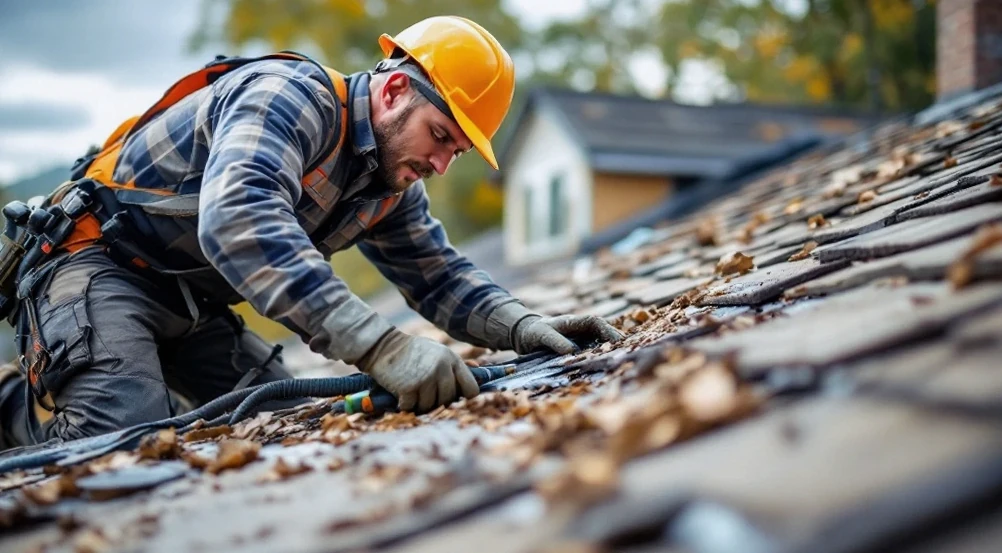
Day one starts with a ladder inspection. The roofer checks for soft spots, missing shingles, and rusted flashing while you point out where the leak appears inside. They'll run a hose on suspicious areas if the leak isn't obvious, since some only show up during heavy rain.
Once they find the source, they'll quote the repair. This is when you'll hear if the decking underneath is rotten or if a full section of flashing needs replacing. On a 1950s ranch in Capitol Heights, that might mean custom-bent metal to match the original. On a newer home in EastChase, it could be swapping out a plastic vent.
Actual repair work goes fast if the weather holds. Damaged shingles get pried up, old nails removed, and new ice-and-water shield stuck down before the replacement shingles go on. Flashing gets sealed with butyl or urethane caulk made for Alabama heat. Crews haul off all old materials unless you ask to keep a few shingles for repairs.
Cleanup matters. Good roofers sweep the yard for nails with a magnet roller and check gutters for debris. They'll walk you through what they fixed and show you photos of the damage. If they found unrelated issues like moss growth or loose gutters, they'll note those too but won't pressure you to fix them on the spot.
- Inspection: Ladder check for damage, hose test if needed
- Quote: Decking repair, flashing type, shingle match discussed
- Repair: Rotten wood replaced, underlayment sealed, materials matched
- Cleanup: Magnetic nail sweep, gutter check, photos shared
How long does Roof Leak Repair take?
Most Montgomery roof leak repairs take 4-8 hours from inspection to cleanup if materials are on hand. Delays happen if decking is rotten, custom flashing must be bent, or afternoon thunderstorms roll in.
A simple shingle replacement over a small leak takes half a day. That's common in neighborhoods like Halcyon where roofs are newer and access is easy. Add time if the crew has to work around satellite dishes, solar panels, or security cameras mounted on the roof.
Historic districts like Garden District slow things down. Repairing a slate tile or copper flashing means hand tools instead of nail guns, and matching 1920s materials might require a specialty order. Rain delays are frequent in spring, so good roofers keep tarps strapped down tight overnight.
Multi-layer leaks take longer. If water's been getting in around a chimney for months, the sheathing underneath could be soft. The crew has to cut out bad wood, sister new boards to the rafters, and rebuild the flashing system before they even touch the shingles. That turns an afternoon job into two days.
Watch the forecast. July repairs often start at dawn to beat the heat and afternoon storms. Roofers won't work in lightning or high winds, so if your leak happens during a rainy week, expect some rescheduling. Winter jobs move faster but risk ice on the roof by mid-morning.
Common questions about the Roof Leak Repair process
Frequently Asked Questions
Will my homeowners insurance cover this repair?
Maybe. Sudden damage from a storm or fallen tree usually qualifies, but slow leaks from wear and tear often don't. Take photos before any repairs start and check your policy's deductible. Montgomery adjusters see a lot of hail claims, so they're strict about pre-existing damage.
How do I know if the leak damaged my attic insulation?
Wet insulation mats down and smells musty. Fiberglass dries out if the leak's fixed fast, but cellulose stays clumped. Push back the insulation near the leak to check for mold on the rafters. An energy audit from Alabama Power can spot hidden moisture issues.
Can I just patch it myself with roof cement?
Short term, yes. Slapping tar on a cracked vent boot might get you through a few rains. But Montgomery's heat bakes DIY patches brittle by summer's end. Without fixing the root cause, like replacing the boot or sealing the nail holes, you'll just chase leaks year after year.
Why does the roofer want to replace flashing that looks fine?
Flashing fails from the back first. That shiny aluminum around your chimney might look intact, but the underside could be corroded where it laps under the shingles. Step flashing especially wears out where each piece overlaps. If they're already up there fixing the leak, replacing old flashing prevents callbacks.
My ceiling stain is brown. Does that mean mold?
Not always. Water picks up dirt from the roof and attic as it travels, so stains often look worse than they are. Real mold grows in rings or fuzzy patches and keeps spreading after the leak stops. If the stain dries out and doesn't return after a repair, a bleach scrub usually handles it.
Should I worry about matching shingles on my 15-year-old roof?
In Montgomery, yes. Sun fades shingles fast here. Even a year-old batch won't match perfectly, but getting the same brand and color blends better. Keep leftover shingles from the original install if possible. Roofers can sometimes 'harvest' matching ones from a less visible section like the back slope.
The leak only happens in hard rains. Will the roofer still find it?
They should. Pros use a garden hose to simulate rain while someone watches inside for drips. Starting low and working up the roof, they isolate the general area, then check for lifted shingles or cracked sealant there. Slow leaks are trickier but leave water trails under the felt paper.
My roofer says I need a new roof soon. Are they upselling?
Possibly, but not always. If the leak is one of many, or the decking is soft in multiple places, replacement makes sense. Ask to see the damage photos. In Montgomery, roofs take a beating; 20-year shingles often need replacing at 12-15 years here. Get a second opinion if you're unsure.
Need roof leak repair in Montgomery? Get a free estimate today.
📞 256-507-6915